.png)

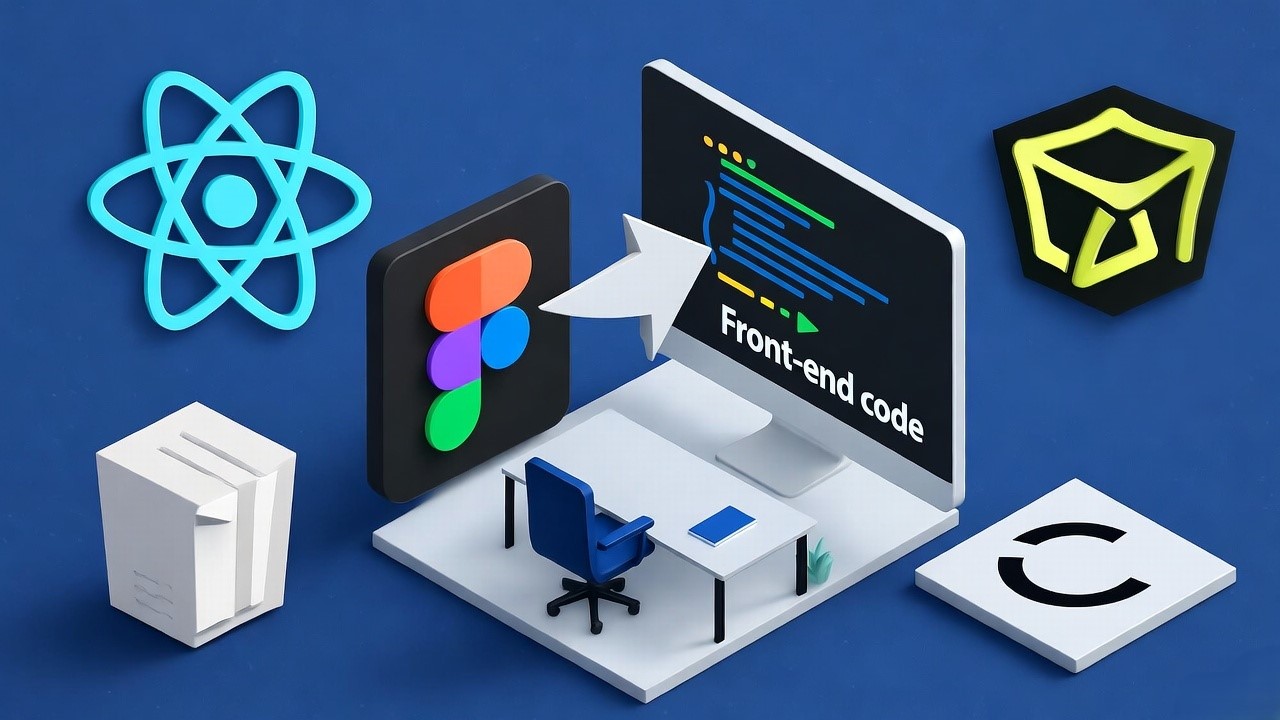
The Evolution of Front-End Development Technologies in 2025
Front-end development has become one of the most dynamic areas in software engineering. From the first HTML pages to advanced Figma-to-code automation, the field now blends design, logic, and performance at an unprecedented level.
As a U.S.-based SaaS company specializing in design-to-code transformation, we’ve seen how the expectations around speed, scalability, and user experience have reshaped the front-end tech stack. In this article, we’ll explore the most relevant technologies, frameworks, and workflows defining modern front-end development and where the next phase of innovation is heading.
Front-end development technologies now focus on automation, design-system integration, and AI-assisted coding for faster, scalable web experiences.
The Modern Front-End Stack: More Than Just Code
The modern front end is no longer limited to HTML, CSS, and JavaScript. It’s a layered ecosystem involving frameworks, preprocessors, build tools, and design integrations.
Today, a standard front-end architecture in U.S. SaaS companies includes:
- Component-based frameworks such as React, Vue, or Svelte
- TypeScript for type-safe, large-scale codebases
- Next.js or Nuxt.js for server-side rendering (SSR)
- Tailwind CSS or CSS-in-JS for rapid styling consistency
- Design-to-code tools for bridging Figma and production code
- Automation in CI/CD pipelines for versioning, testing, and deployment
This modular approach allows engineering teams to ship interfaces that scale while maintaining visual and functional consistency.
Figma-to-Code: Redefining the Development Workflow
The handoff between design and development has always been a bottleneck. With design-to-code platforms like ours, that gap is closing.
Figma’s dominance as a collaborative design platform made it the perfect foundation for automated code generation. The ability to convert Figma layouts into React, Angular, or Vue components now saves developers 30–50% of front-end build time.
Core advantages of Figma-to-code tools:
- Pixel-perfect consistency across design and production
- Automatic responsive layouts based on Figma constraints
- Reduced rework and human error during translation
- Integration with Git-based workflows for continuous delivery
For product teams in the U.S. working on SaaS applications, this approach transforms design from a static phase into a continuous, code-synced process.
Most Popular Front-End Development Technologies in 2025
Here’s a look at the technologies dominating U.S. front-end teams this year:
These frameworks have become essential not just for performance, but also for compatibility with automated tools like ours that generate production-ready front-end code from Figma.
Why React and Next.js Still Lead in 2025
React continues to be the backbone of most front-end projects in the United States. Its component-based architecture pairs naturally with modular design systems.
Next.js, now supported by Vercel’s global edge infrastructure, enables U.S. companies to build SEO-optimized, lightning-fast applications with server-side rendering and API routes included out of the box.
React’s open-source community, combined with the enterprise-grade scalability of Next.js, makes this duo the de facto choice for design-to-code automation tools, allowing generated code to be directly deployable with minimal manual adjustment.
The Rise of TypeScript in Front-End Development
TypeScript has moved from being a “nice-to-have” to a default standard.
Its type safety ensures that automatically generated code (e.g., from Figma-to-code systems) remains predictable and maintainable as teams grow.
Key benefits for SaaS teams:
- Reduced runtime errors
- Improved code readability
- Better collaboration between design and dev teams
- Easier integration into CI/CD pipelines
For design automation tools, TypeScript provides a robust type layer that validates generated code before deployment, reducing QA effort and support tickets later.
CSS Frameworks and Design Systems Integration
The visual layer of front-end development has matured through design tokens, component libraries, and CSS frameworks that ensure brand consistency across platforms.
Popular tools in 2025 include:
- Tailwind CSS — for atomic, responsive design.
- Chakra UI — pre-built React components with accessibility baked in.
- Material UI (MUI) — Google's design language for enterprise apps.
When connected to Figma libraries, these frameworks allow instant synchronization between design tokens and generated code. This ensures that every update in Figma is automatically reflected in the production UI.
How AI Is Influencing Front-End Development
AI is no longer a futuristic idea, it’s embedded in daily development workflows.
In the U.S., front-end teams use AI-assisted coding tools like GitHub Copilot, Amazon CodeWhisperer, and Replit Ghostwriter. But beyond that, AI-powered Figma-to-code conversion is now capable of understanding layout intent and accessibility rules.
AI helps developers:
- Detect inconsistent UI patterns before release
- Suggest semantic HTML structures
- Auto-generate unit tests from design data
- Predict performance bottlenecks during development
For SaaS companies, combining AI with design-to-code automation shortens the cycle from concept to deployment.
Front-End Performance Optimization Technologies
User expectations in the U.S. demand under-2-second page load times. To achieve that, modern front-end teams rely on performance-focused technologies like:
- Code splitting and lazy loading in Next.js
- Server-side rendering (SSR) for initial load optimization
- Edge caching with CDN integration
- Image optimization via modern formats (WebP, AVIF)
- Core Web Vitals monitoring using tools like Lighthouse and SpeedCurve
Performance directly impacts SEO and user retention, two critical areas for SaaS growth.
Emerging Trends: Web Components and Micro Front-Ends
While frameworks dominate, Web Components have quietly gained traction for enterprise-grade modularity.
Similarly, micro front-ends allow large organizations to scale multiple teams working on the same application.
This trend fits perfectly with design system-driven development, where each unit owns its UI components while maintaining consistent design tokens across the ecosystem.
Benefits include:
- Parallel team development
- Easier scaling for multi-brand SaaS products
- Improved release autonomy
Security in Front-End Development
Security is now a shared responsibility between front-end and back-end teams. With more logic moving client-side, developers in the U.S. are adopting practices like:
- Content Security Policy (CSP) enforcement
- Dependency vulnerability scanning using npm audit
- Static code analysis with tools like SonarQube
- Authentication integration with OAuth and SSO standards
As design-to-code automation tools generate UI components, embedding security standards at the template level helps prevent injection attacks and misconfigurations from the start.
Accessibility and Inclusive Design
Inclusive design has become a core metric for front-end success in 2025.
Automated design-to-code tools now analyze Figma layers to ensure contrast ratios, alt text, and tab order are compliant with WCAG 2.2 standards.
Accessibility practices improving U.S. SaaS adoption:
- Semantic HTML structures
- ARIA roles for dynamic components
- Keyboard navigation support
- Auto-detected contrast alerts in design files
Beyond compliance, accessibility leads to broader product adoption, particularly in regulated sectors like healthcare and education.
A Quick Comparison: Traditional vs. Automated Front-End Development
The Future of Front-End Development in the United States
The U.S. front-end ecosystem is leaning toward automation-first architecture—where designs, tokens, and components are all part of a single, connected workflow.
By 2026, Figma-to-code generation, combined with AI-driven refactoring, will become the industry norm. Companies that adopt early will drastically reduce front-end costs and accelerate release cycles.
At the same time, developer creativity remains central. Automation frees engineers to focus on logic, interactivity, and user experience—the aspects that truly differentiate a SaaS product.
Conclusion
Front-end development in 2025 stands at the crossroads of design intelligence and engineering automation.
For U.S. SaaS companies, integrating Figma-to-code workflows, AI-assisted development, and modern frameworks like React, Next.js, and TypeScript ensures scalable, performant, and maintainable products.
Teams that align their design systems and front-end stack today will be the ones delivering faster, more consistent, and more accessible applications tomorrow.
If your team is exploring automated front-end generation or design system integration, reach out to discuss how our platform can help you convert Figma designs into production-ready React code—without losing design precision or developer control.
.svg)